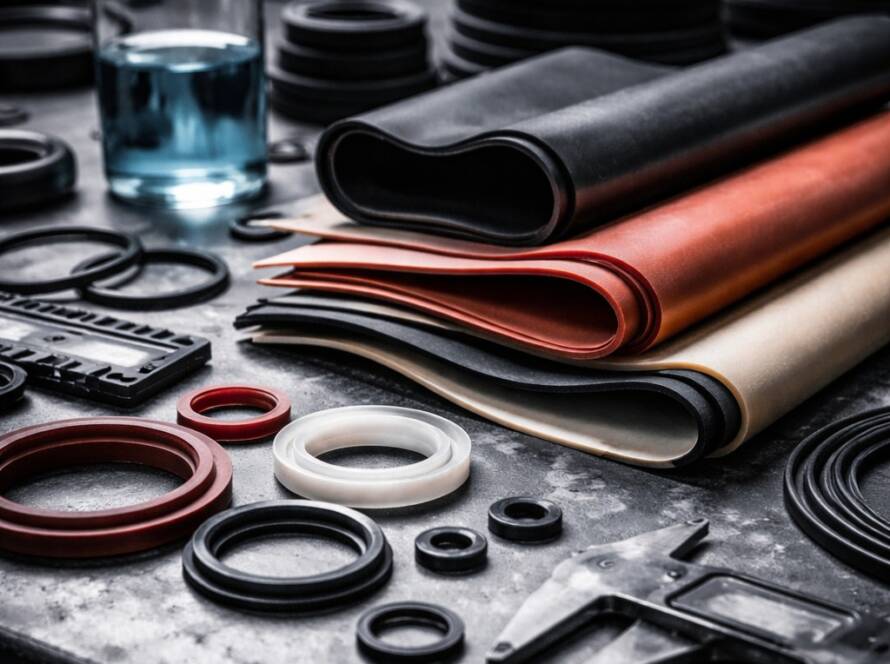
Rubber and silicone are two of the most widely used materials in industrial manufacturing, yet they are often misunderstood or used interchangeably.
While both materials offer flexibility and durability, their performance characteristics differ significantly depending on the application. Choosing the wrong material can lead to premature failure, reduced product lifespan, and increased maintenance costs.
Understanding the differences between rubber and silicone is essential for selecting the right material for your specific application.
1. What is Traditional Rubber?
Traditional rubber refers to a range of elastomers such as natural rubber, EPDM, and nitrile (NBR), each designed for different industrial conditions.
These materials are typically used where:
- strong mechanical performance is required
- cost efficiency is important
- exposure to oils or abrasion is common
Rubber is widely used in:
- automotive components
- industrial seals
- mechanical systems
2. What is Silicone?
Silicone is a synthetic elastomer known for its exceptional stability and performance in extreme conditions.
Unlike traditional rubber, silicone maintains its properties across a wide temperature range and is highly resistant to environmental factors.
It is commonly used in:
- medical devices
- consumer electronics
- food-grade applications
- high-temperature environments
3. Key Differences
Temperature Resistance
Silicone performs significantly better in extreme temperatures, maintaining flexibility in both high heat and cold environments.
Rubber materials vary depending on type but generally have a more limited temperature range.
Chemical Resistance
Nitrile rubber offers strong resistance to oils and fuels, making it ideal for automotive applications.
Silicone, on the other hand, is more resistant to environmental factors such as UV exposure and oxidation.
Durability and Wear
Traditional rubber materials often provide better abrasion resistance and mechanical strength in heavy-duty environments.
Silicone is softer and more flexible but may not be suitable for high-friction applications.
Cost Consideration
Rubber is generally more cost-effective for large-scale industrial use.
Silicone tends to be more expensive due to its specialized properties and manufacturing process.
4. When to Use Rubber
Rubber is the preferred choice when:
- cost efficiency is a priority
- components are exposed to oils or fuels
- high mechanical strength is required
- the environment is not extreme
Typical applications include:
- automotive seals
- industrial machinery components
- vibration dampers
5. When to Use Silicone
Silicone is ideal when:
- temperature resistance is critical
- flexibility must be maintained over time
- the product is exposed to weather or UV
- medical or food-grade standards are required
Typical applications include:
- medical devices
- electronic components
- sealing systems in harsh environments
6. Choosing the Right Material
In many cases, selecting the correct material requires a detailed understanding of the operating conditions and product requirements.
At SSD Rubber, we work closely with clients to evaluate:
- environmental exposure
- mechanical requirements
- cost constraints
- product lifespan expectations
This ensures the final material selection delivers both performance and reliability.
Conclusion
Rubber and silicone each have their strengths, and neither is universally better than the other. The key is selecting the material that aligns with your application requirements.
By understanding these differences and working with an experienced manufacturing partner, companies can significantly improve product performance and reduce long-term costs.