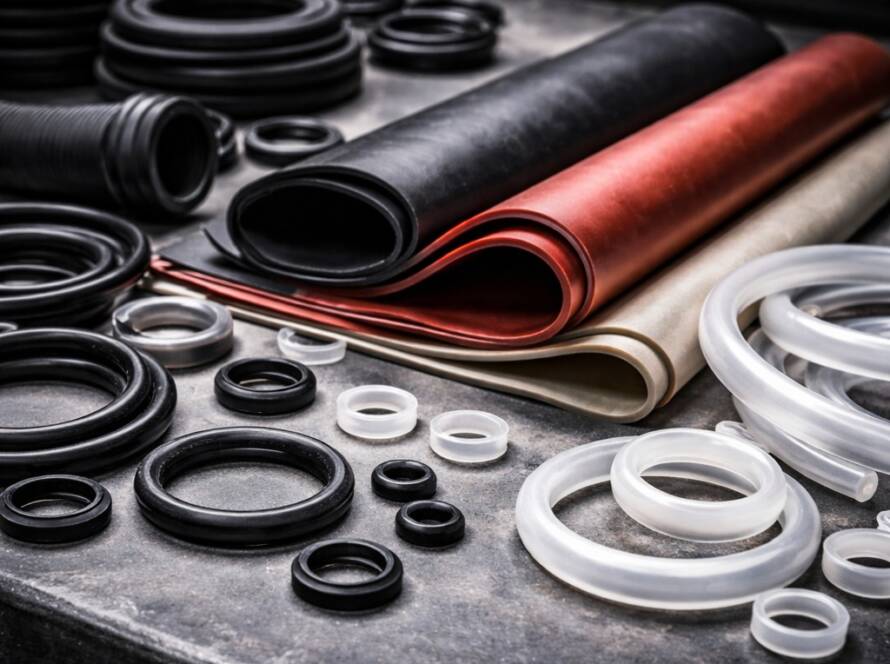
Selecting the correct rubber material is one of the most critical decisions in industrial product design. The performance, durability, and reliability of a component often depend on how well the material matches the operating environment.
From automotive systems to medical devices and infrastructure projects, rubber components must withstand a wide range of conditions including temperature variations, chemical exposure, pressure, and mechanical stress.
Understanding the differences between materials such as silicone, EPDM, and nitrile rubber is essential for ensuring long-term performance and minimizing failure risks.
1. Understanding Application Requirements
Before selecting a material, it is important to clearly define the application conditions.
Key factors include:
- Operating temperature range
- Exposure to chemicals or oils
- Mechanical stress and compression
- Environmental exposure (UV, ozone, moisture)
- Required flexibility and elasticity
For example, automotive engine components require materials that can withstand high temperatures and oil exposure, while bathroom drainage systems require excellent water resistance and sealing performance.
2. Silicone Rubber (VMQ)
Silicone rubber is widely used in applications where temperature resistance and flexibility are essential.
Key advantages:
- Excellent performance in extreme temperatures
- High flexibility and elasticity
- Strong resistance to UV and weathering
- Suitable for medical and food-grade applications
Silicone is commonly used in:
- medical devices
- consumer electronics
- sealing components exposed to high heat
3. EPDM Rubber
EPDM (Ethylene Propylene Diene Monomer) is known for its outstanding resistance to environmental conditions.
Key advantages:
- Excellent resistance to water, steam, and weather
- Strong performance against UV and ozone
- Good durability in outdoor environments
Typical applications include:
- construction seals
- automotive weather stripping
- bridge and infrastructure components
4. Nitrile Rubber (NBR)
Nitrile rubber is ideal for applications involving oils and fuels.
Key advantages:
- Excellent oil and fuel resistance
- Good mechanical strength
- Cost-effective for industrial use
Common uses:
- automotive fuel systems
- industrial seals
- hydraulic components
5. Custom Material Selection
In many cases, standard materials may not fully meet performance requirements.
At SSD Rubber, we work closely with clients to:
- select the most suitable material
- adjust formulations when needed
- optimize durability and cost efficiency
Custom rubber solutions ensure that each component performs reliably within its specific environment.
Conclusion
Choosing the right rubber material is not just a technical decision — it directly impacts product performance, lifespan, and safety.
By understanding material properties and working with an experienced manufacturing partner, companies can ensure their components meet both functional and operational demands.